Tunnel – TEMPERATURE configuration parameters: “TEMPERATURE _”
Parameters with the prefix TEMPERATURE_ are related to MTX-Tunnel configurations in scenarios where a MTX-TEMP-RS232 temperature sensor is expected to be controlled. The sensor can be connected to a RS232 serial port of the modem to control the temperature indoors . It can send temperature information to a web server, send an SMS alarm when the temperature is […]
Tunnel – Link Configuration parameters: “LINK_”
Parameters with the prefix LINK_ are related to MTX-Tunnel configurations for scenarios where you want to supervise/configure the modem by means of a real-time connection to a web platform. MTX-Tunnel, as it is stated throughout this manual, permits its remote supervision through AT commands or via Telnet, SMS, Webserver, a GPRS-RS232 gateway with embedded AT commands, […]
Tunnel – Output Configuration parameters: “OUTPUT_”
All models of MTX modems have outputs, be it digital or via relays. By using OUTPUT_ parameters you will be able to control them easily. For example, you will be able to switch a relay following a programmed schedule, in function of the value of an analog input, in function of the reading of a record from […]
Tunnel – CSD Configuration Parameters: “CSD_”
The parameters with the prefix “CSD_” are related to MTX-Tunnel configurations for telemetry scenarios for conventional GSM data calls. MTXTunnel allows you to receive GSM data calls (CSD) in order to create a GSM-serial gateway. It also allows you to use both at the same time, giving priority to the GSM calls. This function is ideal for […]
Tunnel – WAVENIS configuration parameter: “WAVENIS_”
WAVENIS_ prefix parameters relate to MTX-Tunnel featured with a Coronis card for concentrator applications: it reads and controls remote sensors to MTXTerminals using an RF 868 MHz radio link. The WAVENIS_ parameters are only to be used when MTX-Tunnel is operating on an MTX-IND platform with a Wavecard installed inside. Please also read “LOGGER_” related parameters. WAVENIS_mac1, […]
Tunnel – MODBUSTCP Configuration parameters: “MODBUSTCP_”
From the MTX-Tunnel v9.22 version it is also possible to configure the MTX modems as a modbus slave device. By configuring the MTX modem as a modbus slave, you can write and read registries, read the status of the digital inputs, change the digital outputs and relays, read the analog digital converters, consult the coverage and send any […]
Tunnel – MODBUS configuration parameter: “MODBUS_”
MODBUS_ parameters can configure MTX-Tunnel to take modbus RTU device readings. The Modbus RTU device is connected to a serial port on the modem of MTX Terminals and the internal registers are read. It is also possible to read and write modbus variables with AT^MTXTUNNEL=GETMODBUS and AT^MTXTUNNEL=SETMODBUS commands. MODBUS_address Description: ModBus RTU address parameter specification. […]
Tunnel – LOGGER configuration parameters: “LOGGER_”
LOGGER_ prefix parameters relate to MTX internal datalogger features. Datalogger has to be enabled when reading ModBus equipment connected to a serial port. Datalogger can be used to store readings and the status of inputs/outputs. LOGGER_enabled Description: enable internal MTX-Tunnel datalogger. It will store RF cards –Wavenis cards- readings, input/output values/statuses and Modbus data in the […]
Tunnel – ULP Configuration parameter: “ULP_”
The “ULP_” configuration parameter is only related to MTX-Tunnel installed on the modem terminal modem. ULP means Ultra Low Power mode in which power consumption is only 10uA. In this mode, the modem remains on standby waiting for a configured alarm or a change in the level of digital input. Then all 2G/3G/4G tunnels and […]
Tunnel – DNS Parameter configuration: “DNS_”
In the previous section about DynDNS we explained how and why we use it when we have a few remote modem SIMs that have dynamic IP addresses. If you plan to use and control a large number of devices, this is not practical. Also, DynDNS requires you to have an external server, which means that any possible drops […]
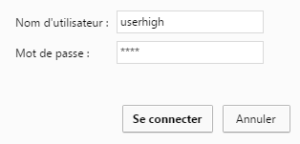
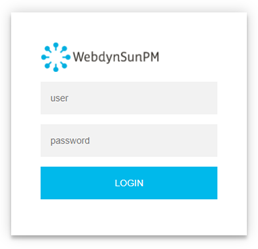 Les accès par défaut sont :
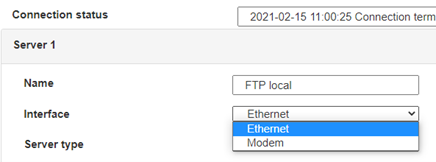
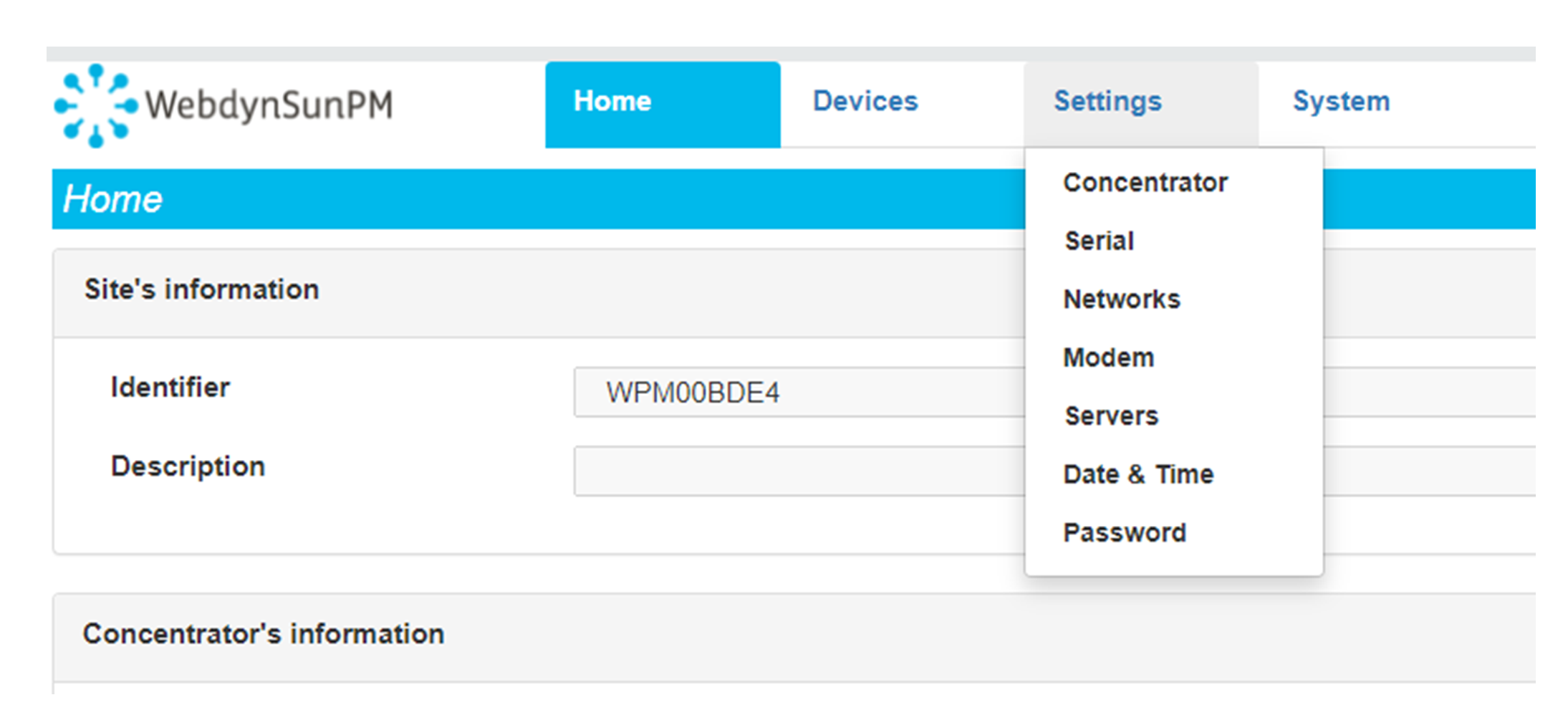 Saisir le mode de connexion « Ethernet » ou « modem » :
 Dans le cas d’une configuration par Ethernet, veiller à ce que les paramètres IP soient compatibles avec l’accès au serveur d’après la configuration du réseau local du concentrateur. Dans le cas d’une connexion par Ethernet, la configuration doit être compatible avec la topologie du réseau local du concentrateur afin qu’il puisse accéder aux serveurs. Cette configuration se fait via la page de configuration « Networks » (voir chapitre 3.2.2.3 : « Réseaux (Networks) »).
Dans le cas d’une connexion par modem, la configuration du modem doit être correcte avant de pouvoir effectuer une connexion. Cette configuration se fait dans la page de configuration « Modem » (voir chapitre 3.2.2.4 : « Modem »).
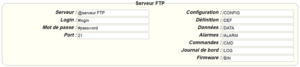
Les paramètres des serveurs à configurer au minimum sont les suivants :
Dans le cas d’une configuration par Ethernet, veiller à ce que les paramètres IP soient compatibles avec l’accès au serveur d’après la configuration du réseau local du concentrateur. Dans le cas d’une connexion par Ethernet, la configuration doit être compatible avec la topologie du réseau local du concentrateur afin qu’il puisse accéder aux serveurs. Cette configuration se fait via la page de configuration « Networks » (voir chapitre 3.2.2.3 : « Réseaux (Networks) »).
Dans le cas d’une connexion par modem, la configuration du modem doit être correcte avant de pouvoir effectuer une connexion. Cette configuration se fait dans la page de configuration « Modem » (voir chapitre 3.2.2.4 : « Modem »).
Les paramètres des serveurs à configurer au minimum sont les suivants :
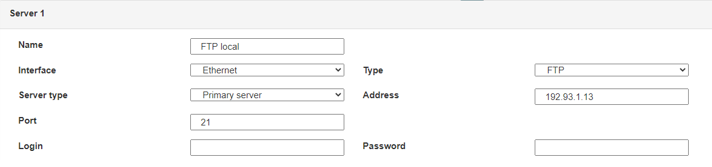 Il faut donc configurer les champs : « Interface », « Type », « Server type », « Address », « Port », « Login » et « Password ».
Les autres champs peuvent être laissés aux valeurs par défaut à condition que les répertoires aient été créés correctement auparavant. Voir chapitre 3.1.2 : « Fichiers de configuration » pour plus de détails.
Il faut donc configurer les champs : « Interface », « Type », « Server type », « Address », « Port », « Login » et « Password ».
Les autres champs peuvent être laissés aux valeurs par défaut à condition que les répertoires aient été créés correctement auparavant. Voir chapitre 3.1.2 : « Fichiers de configuration » pour plus de détails.




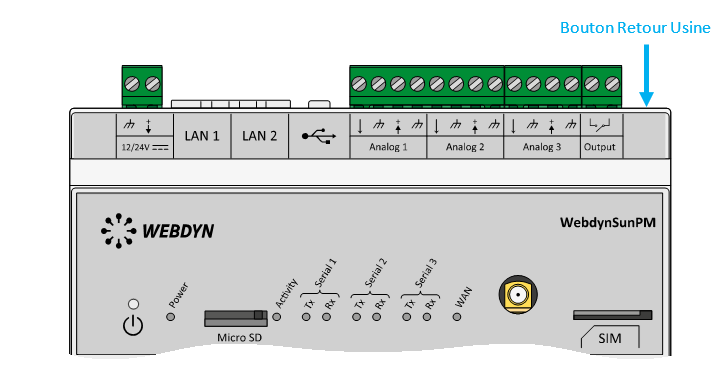 Attendre. Le concentrateur va redémarrer avec sa configuration usine.