Tunnel – Connection with Control Platform via dedicated TCP Socket
Scenario details: There are 100 devices with RS232 port (115200,8,N,1 and HW flow control) which need to be monitored from a Central Control site via 3G.For this purpose MTX-Tunnel will be used, acting as a 3G serial transparent tunnel It is necessary to monitor the modem from a Control Platform at any moment. That means, it should be […]
Tunnel – Online payments for vending machine using Bitcoin from cell phones
Scenario details: We have a vending machine for soft drink cans. Currently, the machine uses coins as payment, and depending on the amount inserted, the machine dispenses the corresponding drink We want to incorporate an online payment system using mobile phones. For this we use Bitcoin Each time a deposit is made to the Bitcoin address […]
Tunnel – Instantaneous online payments using Bitcoin to temporarily activate relays. Activation of automatic car wash
Scenario details: We have a car wash system that works using coins. Currently, the pressure wash system is activated for 2 minutes by a relay each time a coin (1€) is inserted We want to include an online payment system that works using mobile phones which activates the relay that iniciates the pressure wash system, as well […]
Tunnel – 3G gateway “Bluetooth Client” to access devices with “Bluetooth Server” 2.0 connectivity
Scenario details: There’s a Bluetooth 2.0 device configured with a SPP profile (Serial Port Profile) in server mode. Right now, we have a worker who needs to go there with a Bluetooth pone to be able to read the device We need to reduce worker transportation to reduce costs, so we want to install a 3G modem with […]
Tunnel – Access to the reading RS232 port of a vending machine via 3G and Bluetooth Low Energy (BLE)
Scenario details: We need to access the vending machine RS232 port remotely from the company’s central offices. We will use a SIM card with a fixed IP address and the modem must be always online waiting for connections in the TCP 20010 port We need to give access to several maintenance people to the same RS232 port […]
Tunnel – Reading of analog and digital inputs and switching of relays from an Android app via Bluetooth and GPRS/3G
Scenario details: An app for Android telephones that allows for the automatic control of a loft is designed. We need to know the status of three windows (open/closed) as well as the status of the entrance door (open/closed). In a similar way, we wish to monitor the temperature at any time. Via 4 relays, we want to be […]
Tunnel – Accessing the RS232 port of a vending machine via 3G and Bluetooth
Scenario details: We want to be able to access a vending machine’s RS232 port remotely from the company’s central offices. A SIM card with fixed IP will be used, and hte modem must be online at all times, waiting for connections in the TCP20010 port It is necessary for several users to have local access to the […]
Tunnel – Example of using MQTT to activate/deactivate relays of a 3G modem from an Android/IO mobile phone
Scenario details: Intended to be able to activate/deactivate relay outputs from an Android or Iphone mobile phone The SIM card to be used is very affordable and does not have a public IP address, but a private one of the kind 10.x.x.x Solution: MTX-Tunnel firmware + MTX-Java-IoT Configuration example (config.txt file) for the indicated scenario: Configuration Observations GPRS_apn: movistar.esGPRS_login: […]
Tunnel – Switching of a relay for X seconds with an SMS message
Scenario details: We need to be able to activate a relays for some seconds by sending an SMS message By sending an SMS with the text “ON”, the relay will be activated for X seconds. Then, the relay (when an SMS with “ON” is received) will be activated for 10 seconds Only the authorized telephone […]
Tunnel – Switching of relays based on the MTX astronomical clock
Scenario details: We want to switch a relay based on the sunrise and sunset to activate a lighting system It is not possible to set a fixed time, as the time for sunrise/sunset depends on the location (sunrise/ sunset does not happen at the same time in Madrid than it does in Barcelona or Mexico DF) and […]
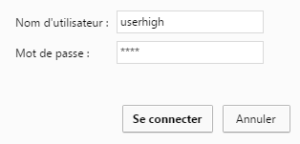
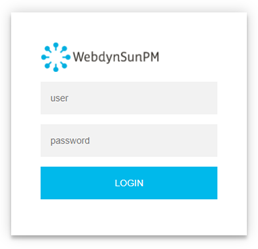 Les accès par défaut sont :
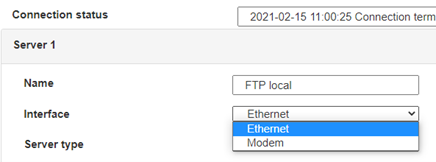
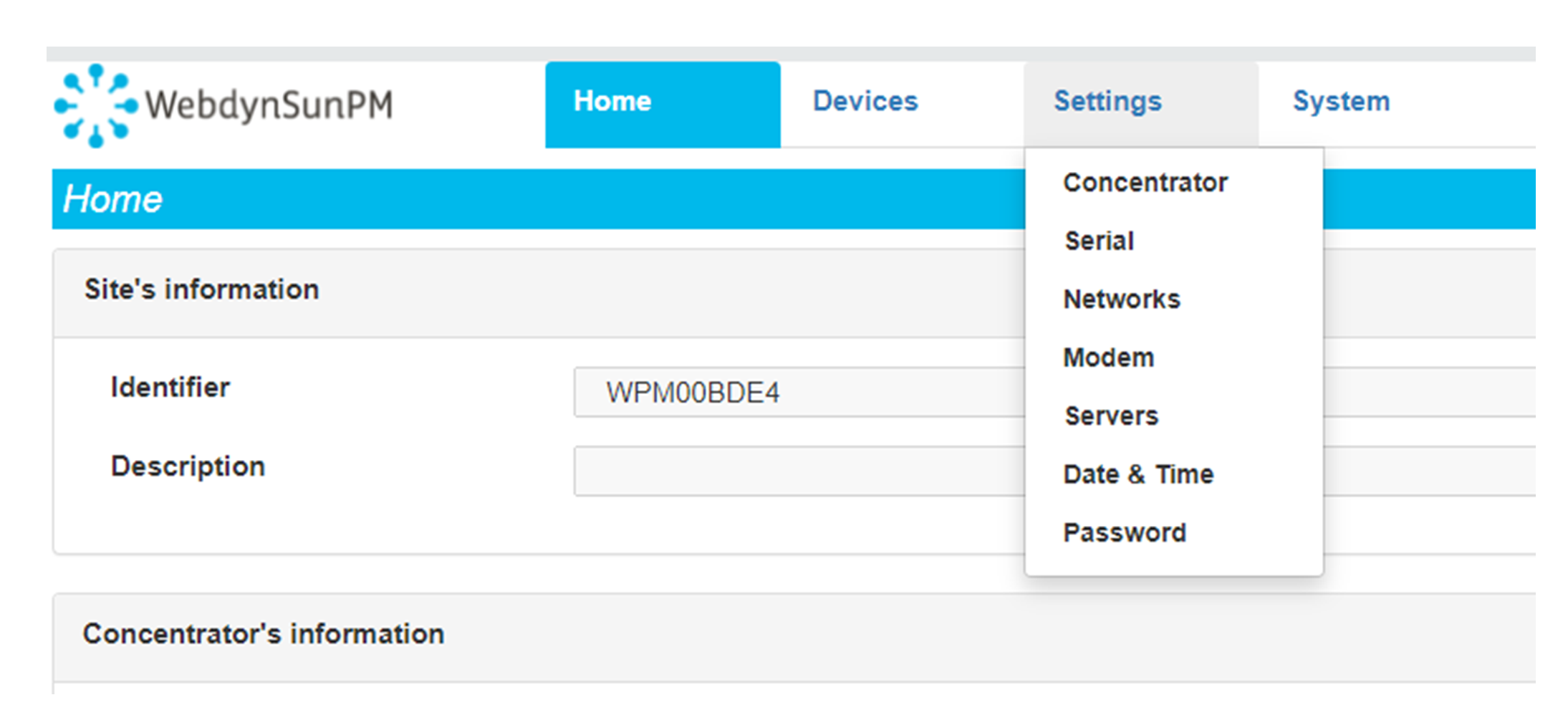 Saisir le mode de connexion « Ethernet » ou « modem » :
 Dans le cas d’une configuration par Ethernet, veiller à ce que les paramètres IP soient compatibles avec l’accès au serveur d’après la configuration du réseau local du concentrateur. Dans le cas d’une connexion par Ethernet, la configuration doit être compatible avec la topologie du réseau local du concentrateur afin qu’il puisse accéder aux serveurs. Cette configuration se fait via la page de configuration « Networks » (voir chapitre 3.2.2.3 : « Réseaux (Networks) »).
Dans le cas d’une connexion par modem, la configuration du modem doit être correcte avant de pouvoir effectuer une connexion. Cette configuration se fait dans la page de configuration « Modem » (voir chapitre 3.2.2.4 : « Modem »).
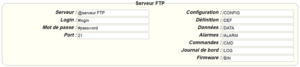
Les paramètres des serveurs à configurer au minimum sont les suivants :
Dans le cas d’une configuration par Ethernet, veiller à ce que les paramètres IP soient compatibles avec l’accès au serveur d’après la configuration du réseau local du concentrateur. Dans le cas d’une connexion par Ethernet, la configuration doit être compatible avec la topologie du réseau local du concentrateur afin qu’il puisse accéder aux serveurs. Cette configuration se fait via la page de configuration « Networks » (voir chapitre 3.2.2.3 : « Réseaux (Networks) »).
Dans le cas d’une connexion par modem, la configuration du modem doit être correcte avant de pouvoir effectuer une connexion. Cette configuration se fait dans la page de configuration « Modem » (voir chapitre 3.2.2.4 : « Modem »).
Les paramètres des serveurs à configurer au minimum sont les suivants :
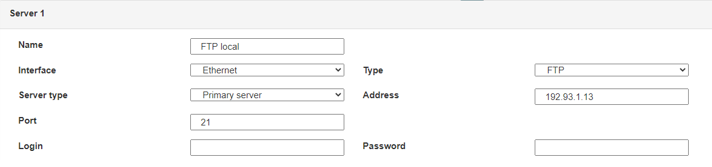 Il faut donc configurer les champs : « Interface », « Type », « Server type », « Address », « Port », « Login » et « Password ».
Les autres champs peuvent être laissés aux valeurs par défaut à condition que les répertoires aient été créés correctement auparavant. Voir chapitre 3.1.2 : « Fichiers de configuration » pour plus de détails.
Il faut donc configurer les champs : « Interface », « Type », « Server type », « Address », « Port », « Login » et « Password ».
Les autres champs peuvent être laissés aux valeurs par défaut à condition que les répertoires aient été créés correctement auparavant. Voir chapitre 3.1.2 : « Fichiers de configuration » pour plus de détails.




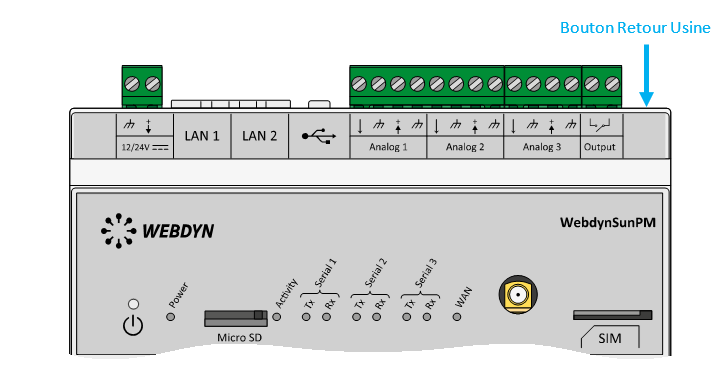 Attendre. Le concentrateur va redémarrer avec sa configuration usine.