CPL G3 technology, the Smart Grid and Smart City pillars
Tomorrow’s communications networks are destined to be increasingly robust, reliable and capable of passing through obstacles such as major constructions. By using the electricity infrastructure to send data, the CPL G3 protocol combines properties while avoiding the creation of new communications channels. Economic, simple and elegant, this technology opens the way to the development of new open standards for many smart grid applications.
For smart and open electric grids that are highly interoperable
The CPL-G3 or G3-Power Line Communication protocol was developed to provide a high level of interoperability in the implementation of smart grids as well as their opening to other protocols. Thus, up till now, CPL-G3 is the only narrow band CPL standard that supports the iPv6 internet protocol. It is used to manage meter management systems via the internet. Communications via transformers become more reliable using this protocol because it makes it possible to optimise the bandwidth and corrects errors using a smart mechanism. It also offers a significantly higher speed than any other radio protocol to allow networks to receive bi-directional communications.
Towards the energy internet
The CPL-G3 specification offers a world of possibilities and opens the path to increasingly smart electric grids as well as to the energy internet. Many applications can be developed using this technology, such as the management and monitoring of the electric grid using smart metering. Smart metering is the possibility for an electricity meter to directly send a subscriber’s or infrastructure’s energy consumption in real time to the distribution grid operator using a router. It also makes it possible to manage lighting, the production of solar energy or to control the charging of an electric vehicle.
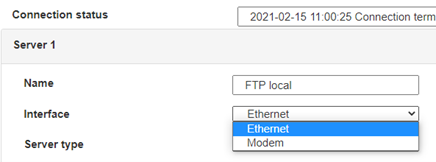
 Enter the “ethernet” or “modem” connection type:
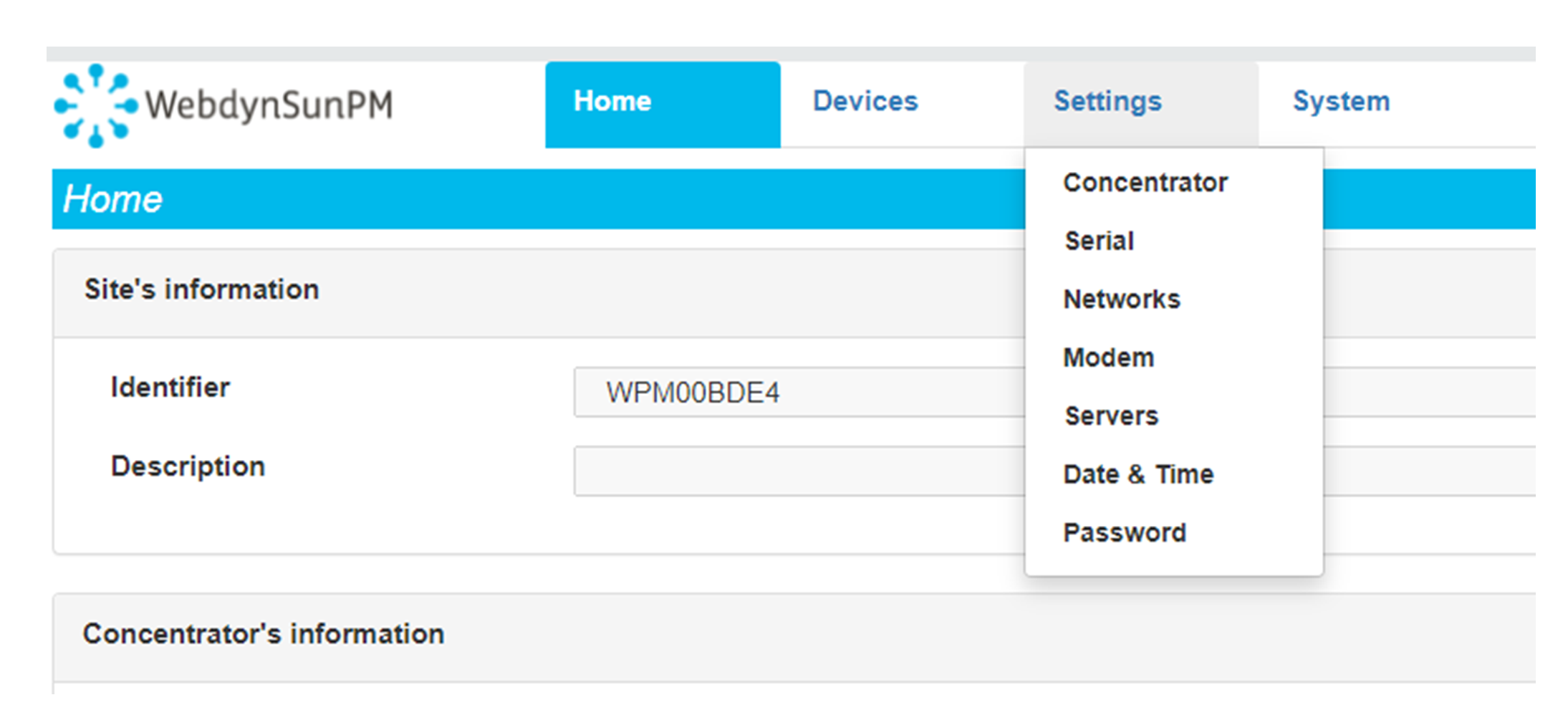
 For an ethernet configuration, make sure the IP parameters are compatible with server access according to the concentrator local network configuration. For an ethernet connection, the configuration must be compatible with the concentrator’s local network topology so that it can access the servers. This configuration is done from the “Networks” configuration page (see section 3.2.2.3: “Networks”).
For a modem connection, the modem configuration must be correct before a connection can be set up. This configuration is done from the “Modem” configuration page (see section 3.2.2.4: “Modem”).
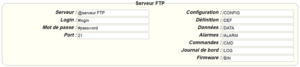
The parameters for the servers to be configured are at least the following:
For an ethernet configuration, make sure the IP parameters are compatible with server access according to the concentrator local network configuration. For an ethernet connection, the configuration must be compatible with the concentrator’s local network topology so that it can access the servers. This configuration is done from the “Networks” configuration page (see section 3.2.2.3: “Networks”).
For a modem connection, the modem configuration must be correct before a connection can be set up. This configuration is done from the “Modem” configuration page (see section 3.2.2.4: “Modem”).
The parameters for the servers to be configured are at least the following:
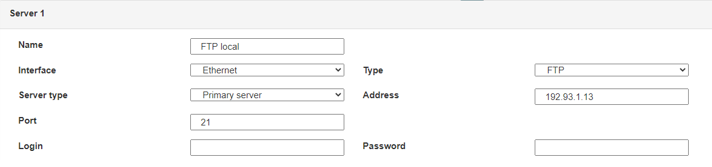 Therefore the following fields need to be configured: “Interface”, “Type”, “Server type”, “Address”, “Port”, “Login” and “Password”.
The other fields can be left at the default values subject to the directories having been properly created beforehand. See section 3.1.2: “Configuration files” for more details.
Therefore the following fields need to be configured: “Interface”, “Type”, “Server type”, “Address”, “Port”, “Login” and “Password”.
The other fields can be left at the default values subject to the directories having been properly created beforehand. See section 3.1.2: “Configuration files” for more details.




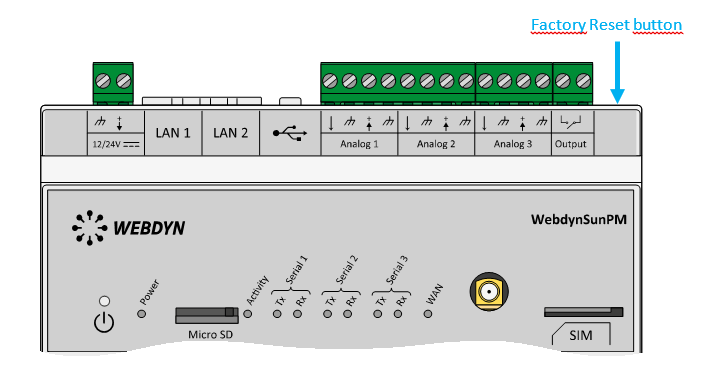 Wait. The concentrator will reboot using its factory configuration.